
Why Moisture Is the First Thing to Address Before Any Basement Remodel
You've decided to finish your basement — maybe you're envisioning a home theater, a guest suite, or a dedicated home office. The excitement is real. But before you start picking out paint colors or flooring samples, there's one critical step that too many homeowners skip: dealing with moisture.
Even in San Diego, where we're known for dry, sunny weather, basements can harbor hidden moisture problems that silently destroy drywall, warp flooring, and create the perfect environment for mold growth. Addressing these issues before you invest in a full basement finishing project is the single most important thing you can do to protect your remodel — and your family's health.
Do San Diego Basements Really Have Moisture Problems?
It's a fair question. We don't get the heavy rainfall that cities on the East Coast or Midwest deal with. But moisture in basements doesn't only come from rain. Here are the most common sources of basement moisture that we encounter working with homeowners across San Diego, La Mesa, El Cajon, and surrounding communities:
- Groundwater seepage: Even in dry climates, the water table can rise seasonally, especially in lower-elevation neighborhoods like Spring Valley and Lemon Grove. Water finds its way through cracks in the foundation.
- Condensation: When warm, humid air meets the cool concrete walls and floors of your basement, condensation forms. This is surprisingly common during San Diego's late-summer humidity spikes.
- Poor grading and drainage: If the soil around your home slopes toward the foundation rather than away from it, rainwater — even from our occasional storms — pools against the basement walls.
- Plumbing leaks: Slow leaks from pipes running through or near the basement can go undetected for months, saturating the surrounding area.
The bottom line: no matter where you live in San Diego County, assuming your basement is perfectly dry without testing is a gamble you don't want to take.
How to Identify Moisture in Your Basement
Some signs of moisture are obvious. Others require a closer look. Before starting any finishing project, walk through your basement and check for these indicators:
Visual Signs
- White, chalky deposits on concrete walls (called efflorescence)
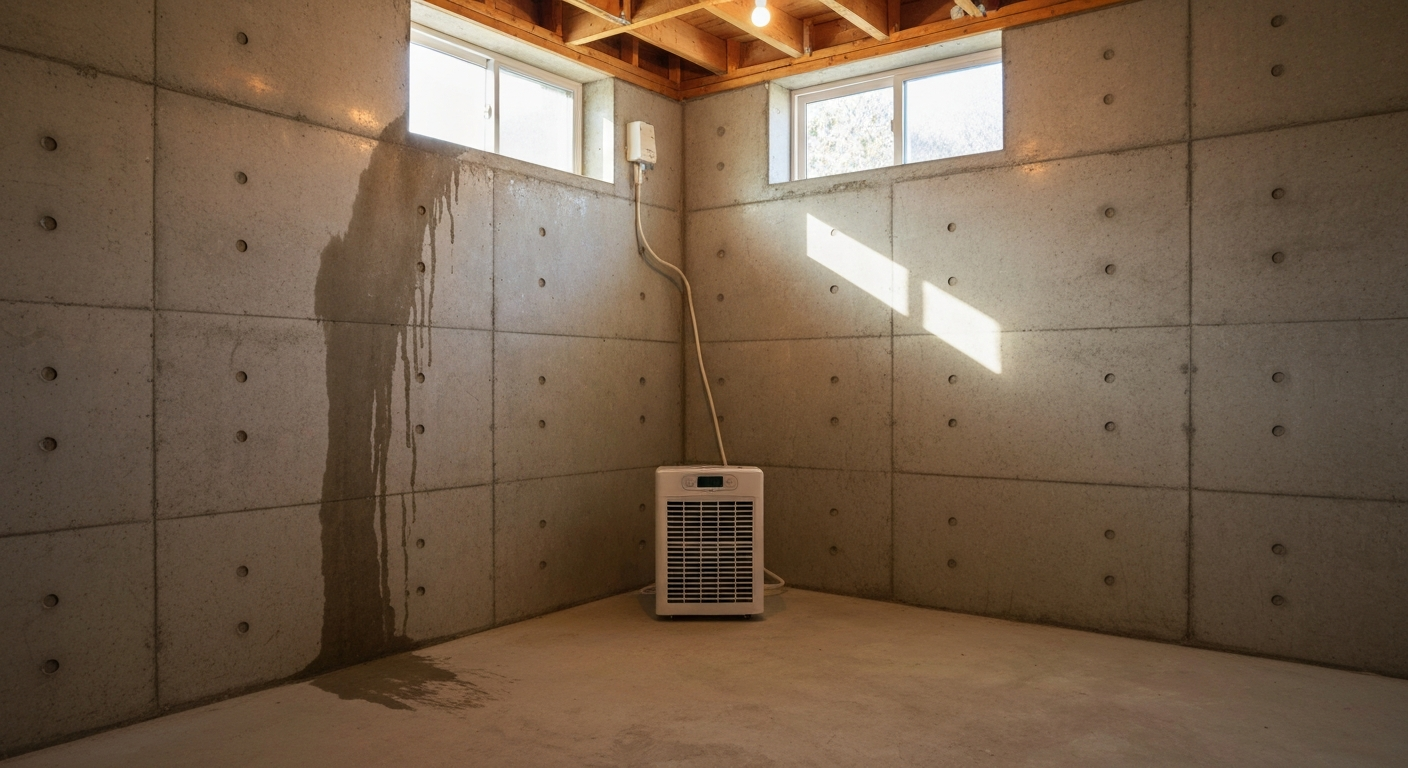
- Damp or dark patches on walls or floors
- Peeling paint or bubbling on existing wall surfaces
- Visible mold or mildew, especially in corners and along the base of walls
- Rust stains on concrete or metal fixtures
Smell and Feel
- A musty or earthy odor, even if faint
- Air that feels noticeably more humid than the rest of the house
The Plastic Sheet Test
If you're not sure whether moisture is present, try this simple DIY test: tape a two-foot square of clear plastic sheeting to the basement floor and another to an exterior wall. Leave them in place for 48 to 72 hours. If you see condensation on the underside of the plastic (the side touching the concrete), moisture is migrating through the concrete. If the condensation is on the room-facing side, you're dealing with humidity in the air. Either way, it needs to be addressed before finishing work begins.
Solutions for Common Basement Moisture Problems
The good news is that most moisture issues are solvable. The key is matching the right solution to the specific problem. Here's what we typically recommend to our clients in Santee, El Cajon, and throughout the San Diego area:
Improve Exterior Drainage
This is often the simplest and most cost-effective fix. Regrading the soil around your foundation so it slopes away from the house, extending downspouts, and clearing clogged gutters can dramatically reduce the amount of water reaching your basement walls.
Seal Cracks in the Foundation
Hairline cracks in poured concrete or block walls are normal as a home settles, but they're also entry points for water. Hydraulic cement and epoxy injections can seal these cracks effectively. For larger structural cracks, a professional assessment is essential before proceeding with any remodel.
Apply Interior Waterproofing
Waterproof coatings and vapor barriers applied to interior walls and floors create a protective layer between the concrete and your finished materials. This is especially important beneath flooring and behind framed walls where trapped moisture can cause serious damage over time.
Install a Sump Pump or French Drain
For basements with recurring water intrusion, an interior French drain system paired with a sump pump provides reliable, long-term protection. The drain collects water that seeps through the foundation and channels it to the pump, which removes it from the basement entirely.
Use a Dehumidifier
If condensation is your primary issue, a quality dehumidifier can keep humidity levels in check. For finished basements, we often recommend a whole-house or ducted dehumidifier that integrates with your HVAC system for consistent climate control.
Why This Matters for Your Finished Basement
Skipping moisture mitigation might save a little time and money upfront, but the long-term consequences can be devastating:
- Mold growth behind walls: Once drywall is up, you can't see what's happening behind it. Mold can spread for months before you notice the smell or health effects.
- Warped or buckled flooring: Luxury vinyl plank, engineered hardwood, and even carpet can be ruined by moisture migrating through the slab.
- Structural damage: Persistent moisture weakens framing lumber and degrades drywall, potentially requiring a costly tear-out and redo.
- Health risks: Mold and mildew release spores that aggravate allergies, asthma, and other respiratory conditions — especially concerning if your basement will be a bedroom or play area.
When we work with homeowners on basement finishing projects, moisture assessment is always part of our process. We check for issues before we frame a single wall, because doing it right from the start is always less expensive than fixing problems after the fact.
Start Your Basement Remodel on Solid, Dry Ground
Finishing your basement is one of the smartest investments you can make as a San Diego homeowner. It adds livable square footage, increases your home's value, and gives your family room to grow — all without the cost and hassle of building an addition. But that investment only pays off if the foundation underneath is properly prepared.
If you're considering a basement remodel and want to make sure moisture won't undermine your project, we're here to help. Basement Finishing Experts works with homeowners across San Diego, La Mesa, El Cajon, Lemon Grove, Spring Valley, and Santee to deliver finished basements that are built to last. Contact us today for a consultation, and let's make sure your basement is ready for its transformation.